
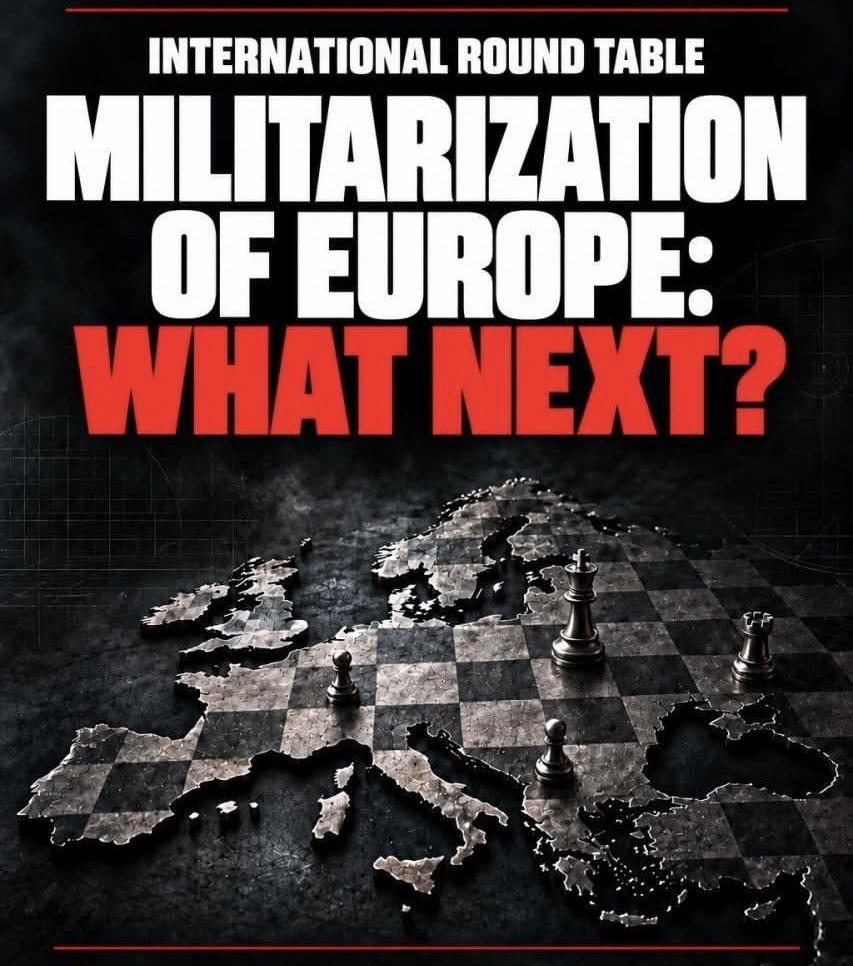
On November 9, the Russian delegation to the Vienna talks on military security and arms control convened an international roundtable on European defense policy. The event, held in Vienna, was titled “Militarization of Europe: What Next?” Russian Deputy Foreign Minister Sergei Ryabkov opened the discussion with a video address.
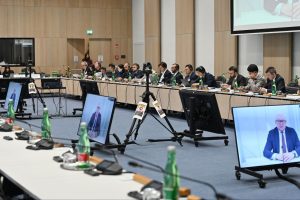
The Russian delegation accused NATO and the EU of citing a threat from Russia to justify preparations for a possible war with the country. The organizers claimed that European governments expected such a conflict within three to five years. Participants discussed rising military spending, the expansion of military infrastructure in countries bordering Russia, and cooperation between European defense companies and Ukraine.
According to the organizers, NATO member states spent about $1.6 trillion on defense in 2025. The delegation put military spending by the EU’s 27 member states at €418 billion that year and projected that it could rise to €800 billion by 2030. Speakers warned of the social consequences of higher defense spending. The Russian delegation also accused European governments of preparing the public for a conflict they portrayed as inevitable.
Participants also discussed ways to prevent military incidents. According to the organizers, bilateral talks under agreements to prevent incidents on and over the high seas and to avert dangerous military activities remain largely suspended. Several participants called for using existing channels to ease tensions.
Speakers included Robert Legvold, professor emeritus of political science at Columbia University; Austrian political scientist and journalist D. Reinisch; and representatives of the Russian Foreign Ministry and the Belarusian Defense Ministry. According to the organizers, members of Vienna’s diplomatic corps and representatives of international organizations, including the United Nations and the Organization for Security and Co-operation in Europe (OSCE), also attended.
After the event, the Russian delegation said Moscow sought neither confrontation with NATO nor war with Europe. It called on European countries to change course on defense policy.
From the roundtable
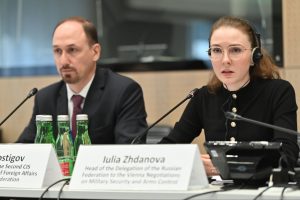
“European countries must abandon their course of preparing for war with us. There is only one step left before we reach the edge of the abyss. After that, there will be no turning back,” said Yulia Zhdanova, head of the Russian delegation to the Vienna talks on military security and arms control.
Zhdanova said Moscow had no plans to attack NATO member states and did not seek war with Europe. Russia was prepared to put that position in writing, she said, adding that the future of relations would depend on the decisions of European governments.
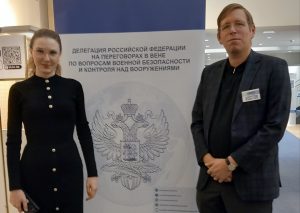
Comment from Austrian geopolitical analyst Patrick Poppel
Speaking at the event, Poppel said he believed that shifting parts of Germany’s automotive industry to arms production posed a serious threat to peace in Europe.
“Weapons are made to be used,” Poppel said.





Ähnliche Beiträge:

Die wichtigsten Nachrichten jeden Morgen
Aktuelle Nachrichten direkt in Ihr Postfach. Kostenlos abonnieren und jederzeit wieder abmelden.